Newsletter: Send Update Participant Roster Announcements

Use the Newsletter to Send each account their Current Participant List Prior to Random Selections

Before running a random selection, it’s important that client accounts have an up-to-date participant list. The Newsletter feature in DrugTestNetwork (DTN) allows you to easily send a message to multiple accounts at once with options to include their current personnel roster so it can be reviewed and updated.

Best Practice: Send this reminder a few days before generating a random selection to give clients time to make updates.

Access the Newsletter Feature

  1. Go to the Utilities menu
  2. Select Newsletter Utilities

Step 1: Enter the Email Subject and Message

  • Enter a clear Subject Line (required)
  • Compose your message
Suggested Subject: Review & Update Your Participant List
Suggested Message: Review your current participant list included here and make any necessary updates prior to the upcoming random selection. Ensuring your roster is accurate helps maintain compliance and prevents missed selections.

Step 2: Choose Who Will Receive the Email

After the sections Message and Closing Statement, you’ll see the section: Indicate the Extent of the Broadcast.  To send the email to a consortium, select Only Selected Consortium, and choose the consortium in the drop-down.

Tip: Use the selected consortium option when preparing a random selection for that specific group.

Step 3: Include the Participant List

The newsletter allows you to include each account’s current personnel roster directly in the email.

Select one of the following options:

  • Active — Only currently active participants
  • Active & Pending — Includes participants not yet fully active
  • ALL — Includes Active, Pending, and Not-Active participants
Important: The participant list cannot be sent when the extent of the email is Everyone - some client contacts (reps) may not be assigned to an account and a list cannot be determined in these cases.

Step 4: Preview or Count Recipients

Before sending, you have options to verify your email:

  • Preview (Show) — Opens a preview of the email
  • Count — Displays how many recipients will receive the message
Recommended: Always preview your message to confirm the message before sending.

Step 5: Send the Newsletter

Once everything looks correct:

  • Confirm recipients and participant inclusion settings
  • Review your message content
  • Proceed with sending the email

Workflow Tip: Preparing for Random Selection

Recommended Workflow:

  1. Send the newsletter requesting participant updates
  2. Allow time for client accounts to review and update their rosters
  3. Verify key accounts if needed
  4. Run the random selection with confidence that your data is current

Final Tip

Using the newsletter feature for participant updates is one of the most efficient ways to communicate with multiple accounts at once. A quick reminder before each random selection helps improve accuracy, compliance, and overall program quality.

SAP/EAP Follow-Up Randon Periodic Drug Testing

Random Periodic Drug Testing Strategies: Individual, Color-Coded, and Horizon-Based Scheduling

In modern drug and alcohol testing programs—particularly those supporting rehabilitation, drug court, family court, DOT compliance, and employee assistance programs—effective scheduling is critical. Testing must be random, defensible, scalable, and operationally practical.

Often, scheduling approaches often fall short when programs expand or when participant requirements vary. DrugTestNetwork (DTN) introduces a comprehensive framework that automatically generates periodic testing dates to adapt to multiple program models, ensuring both compliance and efficiency.

This article outlines the core scheduling methodologies available within DTN, including:

  • Individually scheduled periodic testing
  • Color-coded group testing
  • Fixed-date program scheduling
  • Open-ended horizon-based scheduling
  • Constraint-based randomization and failure handling

1. Individually Scheduled Periodic Testing

Individually scheduled testing generates a unique set of randomized test dates for each participant based on defined parameters:

  • Frequency (nDays) — number of required tests
  • Timeframe — number of days in the testing window

For example, a 2/14 configuration requires two test dates within every 14-day window. Each participant’s schedule is generated independently, ensuring:

  • Maximum randomness
  • Even distribution of testing volume
  • Reduced risk of predictable patterns

This model is particularly effective when participants report to a single clinic or limited number of collection sites, as it prevents operational bottlenecks caused by concentrated testing volume.


2. Color-Coded Testing (Group Scheduling)

Color-coded testing introduces a group-based scheduling model where a predefined set of randomized dates is generated for a Color Code (e.g., Red, Blue, Green).

Participants assigned to a color inherit that color’s schedule, meaning:

  • All participants with the same color test on the same dates
  • Administrative overhead is significantly reduced
  • Scheduling becomes standardized across groups

This model is highly effective in distributed environments where participants report to multiple clinics across a region, city, or state. However, it requires careful planning when participants share a single collection site, as simultaneous testing requirements may exceed capacity.


3. Fixed-Date Program Scheduling (Start/End Defined)

Many rehabilitation and court-ordered programs operate within a defined enrollment period. DTN supports fixed-date scheduling based on:

  • Program Start Date
  • Program End Date

Within this window, the system generates all required test dates according to the participant’s frequency and timeframe configuration.

This approach ensures:

  • Full coverage of the program duration
  • Compliance with court or clinical requirements
  • Clear visibility into all upcoming obligations

Fixed-date scheduling is commonly used in:

  • Drug court programs
  • Family court monitoring
  • Structured rehabilitation timelines

4. Open-Ended Scheduling with Extended Horizons

Not all participants have a defined program end date. For these cases, DTN introduces horizon-based scheduling, where test dates are generated forward into the future without requiring a fixed end date.

A configurable horizon (e.g., 90 days, 6 months) ensures that participants always have upcoming scheduled tests while avoiding unnecessary long-term projections.

With Nightly Extension enabled:

  • The system automatically extends future dates as time progresses
  • Participants never “run out” of scheduled tests
  • Administrative intervention is minimized

Additional logic prevents excessive generation by skipping participants whose schedules already extend sufficiently into the future.


5. Dynamic Rescheduling and Parameter Changes

When a participant’s testing requirements change—such as frequency or timeframe—DTN treats the update as a new scheduling profile.

The system:

  • Deletes all future scheduled dates (typically from tomorrow forward)
  • Regenerates dates using the updated parameters

This ensures:

  • Consistency with current program requirements
  • No overlap or conflict with prior scheduling logic
  • Clean transition between testing protocols

6. Constraint-Based Randomization

DTN’s scheduling engine incorporates real-world constraints to ensure both compliance and practicality:

  • Exclusion of specific days (e.g., weekends or holidays)
  • Exception calendars (e.g., clinic closures, holidays)
  • Non-consecutive day rules
  • Daily capacity balancing across participants

These constraints are applied during date generation to produce schedules that are both random and operationally viable.


7. Failure Handling and Audit Transparency

In certain scenarios, it may not be mathematically possible to generate all required test dates within a timeframe due to constraints.

Rather than failing silently, DTN:

  • Logs the issue with detailed reason codes
  • Continues generating remaining viable dates
  • Provides reporting for administrative review

This ensures transparency and allows program managers to take corrective action when necessary.


8. Operational Efficiency and Industry Impact

The combination of individual scheduling, color-coded grouping, and horizon-based automation positions DTN as a comprehensive solution for modern testing programs.

Key benefits include:

  • Scalable scheduling across thousands of participants
  • Reduced administrative overhead
  • Improved clinic load management
  • Enhanced compliance with regulatory and judicial requirements
  • Defensible randomization methodologies

Whether managing a small rehabilitation program or a large multi-site testing network, DTN provides the flexibility and control required to maintain both efficiency and integrity.


Conclusion

Periodic drug and alcohol testing is no longer a one-size-fits-all process. Programs vary in size, structure, geography, and compliance requirements.

By supporting multiple scheduling strategies—including individual randomization, group-based color coding, fixed program timelines, and automated horizon extension—DTN enables organizations to design testing protocols that align with their operational realities.

This flexibility, combined with robust constraint handling and audit transparency, establishes DTN as a leading platform in the drug testing and rehabilitation monitoring industry.

Participant List: eMail to Contact / DER

Sending a Participant List to a DER (Designated Employee Representative)

Keeping your clients informed is an important part of managing your program in DTN. You can quickly send a participant list to each company’s Designated Employee Representative (DER) — either in the email body or as a CSV attachment.


Step-by-Step: Send a Participant List

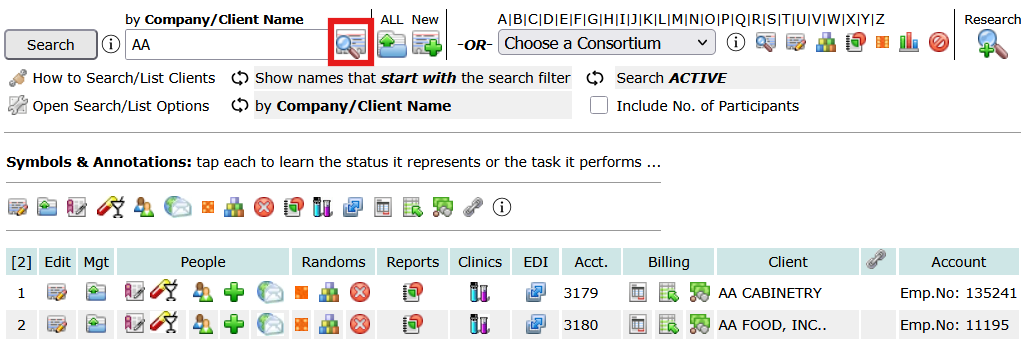
  1. Search for the Company
  2. Click the Email Personnel icon 
  3. Select the Recipient(s)
    Contacts for the company will appear with checkboxes.Ensure the DER is selected.Select additional contacts if needed.

Choose Which Participants to Include

Select the scope of participants to include in the list:

  • Active — Only currently active participants
  • Active & Pending — Includes participants not yet fully active
  • ALL — Includes Active, Pending, and Not-Active participants
Tip: Choose the option that best fits what your client needs to review. Most DERs prefer Active or Active & Pending.

Choose How to Send the List

  • Include in Email Body
    The participant list appears directly in the email message.Best for quick viewing.
  • Attach as CSV File
    Adds a downloadable spreadsheet file.Ideal for sorting and filtering.

Optional: Add Additional Recipients

You are not limited to saved contacts.

  • Enter a name and email address manually to include someone not listed
  • Add yourself to preview the email before sending
Preview Tip: Sending the email to yourself first is a great way to confirm formatting and content before delivering it to your client.

Use an Email Template (Recommended)

Save time by creating a reusable email template instead of writing messages from scratch each time.

To create or edit a template:

  1. Go to the Other-Data menu
  2. Select Mail/Text Messages & Other Documents
  3. Choose Current Personnel Roster
Efficiency Tip: Create a standard message for participant lists and simply make small edits before sending. This can save significant time when working with multiple clients.

Final Step: Review and Send

Before sending, confirm the following:

  • Correct recipients are selected
  • Participant scope is correct (Active, Active & Pending, or ALL)
  • Message content is accurate
  • List format is correct (email body or CSV attachment)
Final Tip: A quick review helps ensure your message is clear, accurate, and professional before sending.

Drug Classes and their included Substances

Here are some drug classes and what they may include. In DTN, a “drug class” can be a broad category, while the items listed beneath it are the specific substances (or reportable analytes) a lab may report under that class.

  • 6-Acetylmorphine
    • 6-Acetylmorphine
  • Amphetamine / Methamphetamine
    • Methamphetamine
    • Amphetamine
  • Benzoylecgonine-Cocaine Metabolite
    • Benzoylecgonine-Cocaine Metabolite
  • Hydrocodone / Hydromorphone
    • Hydrocodone/Hydromorphone
    • Hydromorphone
    • Hydrocodone
  • MDMA/MDA
    • MDA-Methylenedioxyamphetamine
    • MDMA-Methylenedioxymethamphetamine
  • Codeine / Morphine
    • Morphine
    • Codeine
  • Oxycodone / Oxymorphone
    • Oxymorphone
    • Oxycodone
  • Phencyclidine
    • Phencyclidine
  • Marijuana Metabolite
    • Marijuana Metabolite
  • Barbiturates
    • Amobarbital
    • Phenobarbital
    • Secobarbital
    • Butalbital
    • Butabarbital
    • Pentobarbital
  • Benzodiazepines
    • Oxazepam
    • Nordiazepam
    • Temazepam
    • Alpha-hydroxyalprazolam
    • Lorazepam
    • 7-Aminoclonazepam
  • Methamphetamine Isomers
    • D-Methamphetamine
    • L-Methamphetamine
  • Methadone
    • Methadone Metabolite- eddp
    • Methadone
  • Extended Opiates (4)
    • Morphine
    • Codeine
    • Hydromorphone
    • Hydrocodone
  • Propoxyphene
    • Propoxyphene
    • Norpropoxyphene
  • Ethanol
    • Ethanol
  • Creatinine
    • Class: Validation
  • Ethyl Glucuronide
    • Ethyl Glucuronide
    • Ethyl Sulfate
  • Methaqualone
    • Methaqualone
  • Ph
    • Class: Validation
  • Extended Benzodiazepines
    • Extended Benzodiazepines
    • Nordiazepam
    • Oxazepam
    • Temazepam
    • 7-Amino Flunitrazepam (flunitrazepam metabolite)
    • 2-Hydroxy Ethylflurazepam (flurazepam metabolite)
    • Lorazepam
    • Alpha-Hydroxymidazolam
    • Alpha-Hydroxyalprazolam
    • 7-Aminoclonazepam
    • Alpha-hydroxytriazolam
  • Hydrocodone / Hydromorphone
    • Hydrocodone/Hydromorphone
    • Hydromorphone
    • Hydrocodone

Panels, Drug Classes and Reportable Substances

Understanding Drug Classes and Reportable Substances in DTN

Using Amphetamines and Barbiturates as examples

DrugTestNetwork (DTN) reports drug test results based on Panels, which are defined sets of substances that appear on a test report. To support the wide variation in how laboratories report results—and how users want to present them—DTN separates drug classes from reportable substances
and allows flexible panel configuration.

This tutorial explains how those pieces work together and how different reporting styles affect the final report.


Core Concepts

Panels

A Panel is a record in the Panels table and includes:

  • Panel Name (abbreviation) – e.g., 5DSP
  • Description – the full panel name as referred to by the lab

Panels define what may appear on a report, not necessarily what must appear.

Drug Classes

A Drug Class is a logical grouping of related substances (for example,
Amphetamines or Barbiturates).

  • Drug classes provide grouping and interpretation
  • Drug classes may or may not be directly reportable
  • A drug class can contain one or many related substances

Every reportable substance must be associated with one drug class.

Reportable Substances

A reportable substance is an item that can appear as its own line on a report with a  Positive or Negative result.

Important points:

  • A reportable substance must be associated with a drug class
  • A drug class may also be reportable
  • Panels can include:
    • Only the drug class
    • Only specific substances
    • Both the class and its substances

This flexibility allows DTN to adapt to different lab reporting formats and user preferences.


Example 1: Amphetamines

Drug Class Structure

Drug Class: Amphetamines

Associated Substances: Amphetamine, Methamphetamine

Labs commonly report results as:

Amphetamines: Negative

…even though the testing actually evaluates Amphetamine and Methamphetamine separately.  DTN supports several valid panel configurations.

Panel Configuration Options

Option A: Drug Class Only

Panel includes:

  • Amphetamines

Result behavior:

Report shows only:

Amphetamines: Positive / Negative

If the user is manually entering results and knows the specific substance:

  • Amphetamine or Methamphetamine may be added to the report manually
  • This does not require them to be part of the original panel

Option B: Individual Substances Only

Panel includes:

  • Amphetamine
  • Methamphetamine

Result behavior:

Amphetamine: Positive
Methamphetamine: Negative

No overall “Amphetamines” line appears unless it was explicitly added to the panel.

Option C: Class + Substances

Panel includes:

  • Amphetamines
  • Amphetamine
  • Methamphetamine

Example result (Amphetamine positive):

Amphetamines: Positive
Amphetamine: Positive
Methamphetamine: Negative

This mirrors many lab reports and provides full transparency.

Key Amphetamines Rule

If any included substance is positive:

  • The drug class may also be reported as Positive
  • Whether negative component substances appear depends on:
    • Panel definition
    • Lab EDI data
    • User reporting preferences (manual entry)

Example 2: Barbiturates

Drug Class Structure

Drug Class: Barbiturates

Associated Substances: Amobarbital, Phenobarbital, Secobarbital, Butalbital, Butabarbital, Pentobarbital

This is a common case where users often want simpler reporting.

Typical Panel Setup

Panel includes:

  • Barbiturates

Default result:

Barbiturates: Negative

None of the individual substances appear unless needed.

Reporting a Specific Positive

If, for example, Amobarbital is positive:

  • Amobarbital must already exist as a reportable substance in DTN
  • It must be associated with the Barbiturates drug class
  • The user can then add it during result entry

Result may show:

Barbiturates: Positive
Amobarbital: Positive

Optional Simplification

If the user prefers:

  • They may remove Barbiturates from the report
  • Leaving only:
Amobarbital: Positive

DTN allows this so reports can match employer preferences, MRO guidance, or historical reporting formats.


Electronic Results (EDI) vs Manual Entry

EDI Results

When results are received electronically via EDI (Electronic Data Interchange):

  • Labs may send:
    • Drug class only
    • Drug class + positive substances
    • Drug class + both positive and negative components
  • DTN stores and reports exactly what the lab sends

Different labs behave differently—even for the same substances.

Manual Entry

When entering results manually:

  • Users may choose their reporting style
  • Drug classes and substances can be:
    • Added
    • Removed
    • Marked Positive or Negative independently
  • This allows correction, clarification, or simplification when needed

Design Principles Behind DTN’s Model

DTN intentionally separates:

  • Drug classes (logical grouping)
  • Reportable substances (what appears on reports)

This design:

  • Supports inconsistent lab reporting
  • Prevents forced over-reporting
  • Allows minimal or detailed reports
  • Keeps regulatory and clinical accuracy intact

Summary

  • Every reportable substance belongs to a drug class
  • Drug classes may or may not be reportable
  • Panels define what can appear, not what must appear
  • Users control reporting detail—especially during manual entry
  • Amphetamines show how classes and components may overlap
  • Barbiturates show why classes are often reported alone

This flexibility is essential for real-world drug testing workflows.

NOTE: You will find management features for Panels, Drug Classes and Reportable Items under the Other-Data menu.

Refer to sections:

  • Test Panels & Other Services
  • Reporting Classifications, Substances, Analytes, Metabolites & Validation Tests

Clearinghouse Data File Format

DrugTestNetwork  Clearinghouse Export Format: Include Company Row / Column (For Your Convenience)

DrugTestNetwork exports DOT Clearinghouse batch query data in the expected column order required for upload.

The DOT requires Text Tab-Delimited – NOT CSV.  By default, DrugTestNetwork generates the file as CSV so it opens easily in Excel for review when you click on the file from the downloads folder.

Why You May See an Extra Company Row or Column

During export, you may choose to include the Company (Employer) name for your convenience:

  • Company name as a row above the listing: Helpful for printing or quick visual confirmation of the employer tied to the export.
  • Company name as a trailing column: Helpful when exporting multiple employers in one request, so you can filter and split the results in Excel.

Important: The extra row and/or column is provided for review and organization only
and is not part of the DOT Clearinghouse batch upload format.


Before Submitting to the DOT Clearinghouse

The DOT Clearinghouse batch upload will be rejected if the file contains extra rows, extra columns, or does not match the required format.

Validation Checklist

  • Remove any extra header rows (such as a company name line above the data).
  • Remove any extra columns (such as a trailing Employer/Company column).
  • Confirm the file contains only the required Clearinghouse columns, in the correct order.
  • Save the final file as Text (Tab-delimited) before uploading.
Validation Warning:
DrugTestNetwork (DTN) may include employer identifiers for convenience when reviewing or splitting exports in Excel.
These must be removed before submission. The final upload file must contain
only the required Clearinghouse columns and must be saved as Tab-delimited text.

Excel: Save the File as “Text (Tab-delimited)”

After reviewing (and, if needed, splitting the file by employer), use the steps below to create a
Clearinghouse-ready upload file.

  1. Open the export in Excel.
  2. If you exported multiple employers:
    use the employer/company column (if present) to filter the sheet to one employer at a time,
    then copy the filtered rows to a new worksheet/workbook.
  3. Remove non-Clearinghouse content:
    • Delete any company-name header row above the data.
    • Delete any extra trailing employer/company column.
  4. Confirm the required Clearinghouse columns remain(and are in the required order).Tip: Make sure there are no blank columns and no additional notes in the sheet.
  5. Go to File > Save As.
  6. Choose a location and file name (recommended: include employer name and date).
  7. In Save as type, select Text (Tab delimited) (*.txt).
  8. Click Save.
  9. If Excel shows a warning such as “This format only supports one sheet” or “Some features may be lost,”
    click OK or Yes to continue (this is expected for tab-delimited exports).
Best Practice:
Submit one tab-delimited file per employer. If your DTN export includes multiple employers, split them in Excel first, then save each employer’s file separately as Text (Tab-delimited).

About DOT Clearinghouse Queries

About DOT Clearinghouse Queries

The DOT Drug & Alcohol Clearinghouse requires employers (or their designated service agents) to run specific types of queries on CDL drivers for compliance. Each query type serves a different purpose depending on when the driver is being checked and what level of information is required.

DrugTestNetwork will output the data, formatted properly, into a file you can upload directly to the DOT through your Clearinghouse Account for a “batch” query.  You can create a file for multiple companies or an individual company and submit them all separately as needed.  Read about the Required File Format.

In batch (.txt) uploads, query types are commonly represented as numeric values:
1, 2, 3, and 4.


Query Type 1: Limited Query

Purpose: Confirms whether a driver has any drug or alcohol violations recorded in the Clearinghouse.

  • What it returns: Yes/No only (no violation details)
  • Consent required: General (standing) consent on file
  • When to use: Annual checks for currently employed CDL drivers (when consent is already on file)

Important: If a Limited Query indicates a violation exists, you must perform a
Full Query (Type 2) to view details.


Query Type 2: Full Query

Purpose: Retrieves detailed Clearinghouse information, including violation and Return-to-Duty status.

  • What it returns: Violation details, dates, RTD/SAP status (where applicable)
  • Consent required: Driver electronic consent for each Full Query
  • When to use: When details are required (e.g., after a violation is found or to confirm RTD status)

Full Queries are used whenever an employer needs the details behind a “violation found” result or needs to verify a driver’s eligibility status following a violation.


Query Type 3: Pre-Employment Full Query

Purpose: A mandatory Full Query performed before allowing a driver to perform safety-sensitive duties.

  • What it returns: Same detailed results as a Full Query
  • Consent required: Driver electronic consent
  • When to use: Pre-employment screening before hiring / onboarding a CDL driver for safety-sensitive work

Key point: A Limited Query (Type 1 or Type 4) cannot be used for pre-employment purposes.
Pre-employment screening requires a Full Query.


Query Type 4: Limited Query with Automatic Consent Request

Purpose: Runs a Limited Query (Yes/No only) and, if general consent is missing, automatically requests it from the driver.

  • What it returns: Yes/No only (no violation details)
  • Consent behavior:
    • If general consent already exists, the Limited Query proceeds normally.
    • If general consent is missing, the Clearinghouse automatically sends a consent request to the driver.
  • When to use: Annual Limited Queries when consent may be missing for some drivers (especially in large batch uploads)

Important: Type 4 still returns only a Limited result. If a violation is found, you must follow up with a Full Query (Type 2) to view details.


Quick “When to Use” Summary

  • Type 1: Annual Limited Query when general consent is already on file.
  • Type 2: Full Query when detailed results are required (including RTD/SAP status).
  • Type 3: Required Full Query for pre-employment screening before safety-sensitive work.
  • Type 4: Annual Limited Query when general consent may be missing; automatically requests consent if needed.

Rule of thumb:
Limited Queries (Types 1 & 4) answer: “Does a violation exist?”
Full Queries (Types 2 & 3) answer: “What are the details?”


Quick Comparison Table

Query Type Name Returns Details? Consent Typical Use
1 Limited Query No (Yes/No only) General consent Annual checks
2 Full Query Yes Electronic consent Details / RTD status
3 Pre-Employment Full Query Yes Electronic consent Pre-hire screening
4 Limited Query with Automatic Consent Request No (Yes/No only) Auto-requests general consent if missing Annual checks at scale

How do I manage the DOT Clearinghouse ?

If you employ FMCSA drivers, you will need to report the list of drivers to the DOT Clearinghouse .

If you’re a TPA (Third Party Administrator) managing driver lists for employers, you can manage their Clearinghouse compliance.

To start, you must have a Clearinghouse account: go to the DOT website to create your account.

To output a list of drivers to an Excel Spreadsheet (in CSV format – Comma Separated Values) to submit to the Clearinghouse, you will have to export all the drivers in an account and remove any drivers that you don’t need to report.

To export the list, first find the client account, click the personnel management icon  . When the management page opens, on the right, choose the option:
DOT ClearingHouse Query: Output Personnel to CSV file for a Query.

You can submit the entire CSV file to the DOT or edit the spreadsheet so only specific drivers are included.

Here are some frequent questions users ask about the DOT Clearinghouse:

What is the Clearinghouse?

The Clearinghouse is a secure online database that gives employers, the Federal Motor Carrier Safety Administration (FMCSA), State Driver Licensing Agencies (SDLAs), and State law enforcement personnel real-time information about commercial driver’s license (CDL) and commercial learner’s permit (CLP) holders’ drug and alcohol program violations.

The Clearinghouse contains records of violations of drug and alcohol prohibitions in 49 CFR Part 382, Subpart B, including positive drug or alcohol test results and test refusals. When a driver completes the return-to-duty (RTD) process and follow-up testing plan, this information is also recorded in the Clearinghouse.
Last Updated : January 08, 2020

Are employers required to query the Clearinghouse or report drug and alcohol program violations for drivers who do not hold a commercial driver’s license (CDL) or commercial learner’s permit (CLP)?

Only employers who employ drivers subject to the licensing requirements in 49 CFR Part 383 and the drug and alcohol testing requirements in 49 CFR Part 382 are required to query or report information in the Clearinghouse. However, employers of drivers not holding a CDL or CLP must still comply with the driver investigation requirements of § 391.23(e), which includes drug and alcohol violation history.
Last Updated : May 13, 2022

Can an employer or medical review officer (MRO) enter a drug and alcohol program violation in a CDL driver’s Clearinghouse record if the driver is not registered for the Clearinghouse?

Yes. When a violation is entered, the Clearinghouse associates it with a driver’s commercial driver’s license (CDL) information. This will be recorded even if the driver has not registered for the Clearinghouse. When an employer queries a driver’s information in the Clearinghouse (with the appropriate consent), they will enter the driver’s CDL information to verify if any violations are associated with that driver’s CDL.

A driver is required to enter their CDL information during their Clearinghouse registration. This allows them to view any violation or return-to-duty (RTD) information associated with their CDL.
Last Updated : January 08, 2020

When One or Both Parts of a Random Test are NOT Collected

A Random Test, sometimes requires both a Drug and a separate Alcohol test. However, there are cases when only one component of the test (e.g., drug or alcohol) was actually conducted. This can happen for a number of reasons. For some compliance considerations, you may want to record why the test was not conducted, and indicate a reason in the report record, for each test component not conducted. If the Date of Collection is set, the test is considered collected and will count toward the annual random selection percentages.  Keep in mind, if a random drug test record is not completed, it will not create any issue with your data or statistical reports.  The record simply exists as an incomplete random test. If you issue non-completed random test reports to the client, these tests will continue to be included.  Random test result records with a collection date or an Overall Qualitative Result are considered resolved. If you resolve the record, the tests will not be included in the non-completed reports.  However, if you don’t want the tests to contribute to the annual percentages, you can leave the collection date blank or, if you enter a collection date, you can use a special Overall Qualitative Result (OQR) that has its attribute set that prevents the test from getting counted as a collected test.  When you use a special OQR, the collection date can then serve as the date the record was resolved.

For example, you might consider these OQRs:

  • Not Conducted
  • No Longer Employed
  • Test Overlooked
If an OQR has the attribute set, Does NOT Contribute to Random Selection Statistics, it prevents the test from getting counted.  See below for instructions to add these OQRs if they are not already in your database.

For tests that were not conducted, follow the guidance below:

Open the test result in the Full Record Editor where you can manage the OQR for the drug and alcohol tests.

You have three options:
Option 1: Omit the Specimen Type

In the Full Record Editor, where you see “Specimen Type” for the drug or “Alcohol Test” for the type of alcohol test to conduct, select the option: Not Tested (or blank if Not Tested isn’t found). Using the option implies the test was not required.
This indicates that no test was required or performed for that portion.
The test result will not be included in the random selection statistics.

Option 2: Use a Special OQR (Overall Qualitative Result) that prevents the test (drug or alcohol) from getting counted. If a collection occurred but one part of the test was overlooked, you can set the OQR for that component using one of the special OQRs.

Option 3: Use OQR Participant Is No Longer Employed

In some cases, the participant may no longer be employed by the company at the time of the scheduled test. The user may still wish to complete the record for data management purposes.

This allows the record to be marked complete while excluding the test from statistics.

To add new OQR with the special attribute:

  1. Navigate to: Other-Data and tap the option: 
    Test Result Codes: Overall Qualitative Results [OQR]
  2. Tap the option to add a new OQR, such as:Test Collection Overlooked
  3. Set check-box for the attribute: Does NOT Contribute to Random selection statistics (see image below).
  4. In the Full Record Editor, apply this OQR to the drug or alcohol component that was not collected.

This ensures that:

  • The urine (drug) test does not count toward annual random selection stats.
  • The Collection Date still applies — for example, to record the alcohol test.

Summary Logic

  • If a Collection Date is entered:
    • The test is normally counted for statistics.
    • Unless the Specimen Type is blank or the selected OQR is set to one marked  Does NOT Contribute to Random selection statistics.

Tip

Use these procedures for cases such as participant not available, overlooked test, or no longer employed. These methods help you maintain a complete record while ensuring your random test statistics remain accurate.

Personnel Menu: Cleaner Presentation

In DrugTestNetwork, the Personnel menu lets you search for people (donors, participants, employees, etc.) across all accounts.  When you find the person you can edit their profile, open their dashboard, create a new drug / alcohol test result record, get a list of all their drug and alcohol test result reports, and more.

The feature now has a new streamlined presentation for less clutter on the page with the same full control of the search.

Click the about icon  to get an overview how search works.

Click the services icon   to read how to easily manage the search options.

Click the wrench icon  to open the Search Options Panel where you’ll find all the options fully presented similarly as in the earlier version of the feature.

Use compact icons  to cycle through search options without clutter.

How to Use the Search Tools

1. Cycle Through Options Using Icons

  • Each of the four search option categories shows an icon control  that cycles through the options in that section when clicked.
  • The label beside the icon updates to show your current selection.

2. Open the Full Search Panel

  • Click on the wrench icon or the label Open Options Panel.
  • Review and change all filters, including Name and ID fields.
  • Choose:
    • Search – run the search immediately
    • OK – apply changes and close the pane


New Feature: Contact Dashboard with Address Copy Tools

There’s a new feature in the Client-Mgt module of DrugTestNetwork.com.

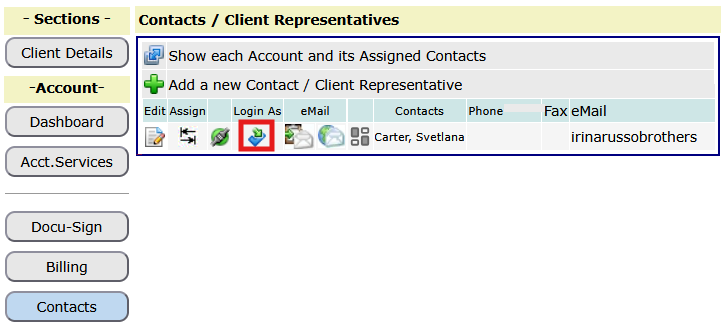
When you open Client-Mgt, you will find the the contact(s) assigned to the account on the Client Dashboard section or you can open the Contacts section where all contacts for the client are listed.

Click the icon  presented next to each contact to open their dashboard.

Open the profile editor or launch the Contact Dashboard directly from the contact list. The dashboard view presents key contact information and management features for the contact.

What’s New

  • New Formatted Dashboard for the Contact:
    After editing and saving a contact’s profile, the contact’s dashboard is presented to acknowledge the record has been saved and provide management utilities for the contact, for example: open the contact profile editor, send an email, account assignments, etc.
  • Quick Access to Contact Info:
    The dashboard also features the contact’s address, phone numbers and email, making it easy to reference or verify at a glance.
  • One-Click Copy Address Tool:
    A new Copy button next to the address allows users to copy the full address to the clipboard with a single click—ideal for emails, shipping labels, forms, or internal notes.

This update is part of a continued effort to make client management easier, richer, and more intuitive for our users. Whether you’re editing contact details or simply referencing client addresses, the new dashboard view brings everything you need into one simple interface.

Hidden Feature: Print or Copy Contact Addresses from Reports

Hidden Time-Saver: Click the Company Name to Access Mailing Tools

There’s a hidden feature built into the Test Result Report page when it’s displayed for printing and provides a convenient way to print the company address when you need to mail the report to the recipient.

When viewing a printable version of a test result report, click the company name at the upper right of the page to open a helpful popup. This feature is designed for those times when you need to mail a physical copy of the report to a company contact — and it makes the process easy.

Here’s what the popup includes:

  •  Full Contact List for the Client
    Quickly browse all representatives associated with the company. Whether you’re mailing results to HR, a DER, or another contact, just pick the appropriate recipient.
  •  Printable Address Option
    Print a formatted mailing address directly from the popup — perfect for envelope labels or cover sheets.
  •  Dashboard with Copy-to-Clipboard Feature
    Want to paste the address into a Word doc, label template, or email? There’s a link to the contact’s dashboard that includes a one-click “Copy Address” feature.  When you click the address from the report to open the Print Address feature, every contact for the client is listed.  Use the radio button to select a contact with their mailing address.  Also, appearing next to each contact is the dashboard icon.  Click the icon to open the dashboard for the contact where you will find a feature to copy the contact’s address to your clipboard which you can use to paste (ctrl-v)  into a Word document, for example.

This feature is designed as a link in the text of the address on the report so there are no extra visible icons or instructions that clutter the presentation of the report and stays out of the way unless you need it. And when you do, it will save time and eliminate the need to dig for addresses elsewhere in the system.


Try it next time you view a test result report — just click the company name to explore.